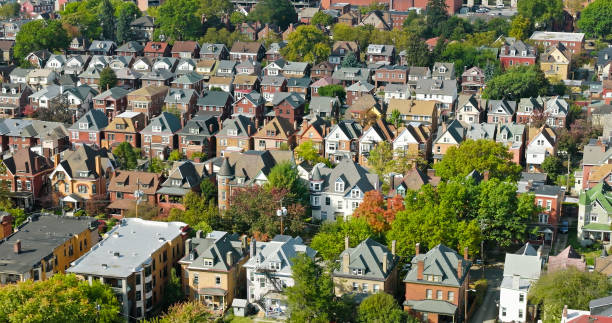
The 2026 Housing Market Is Showing Signs of Momentum — What Does That Mean for Pittsburgh Buyers and Sellers?
If you’ve been waiting for the housing market to “settle down,” you may be wondering whether now is finally the time to make a move.
The good news? There are some encouraging signs heading into the second half of 2026.
While the housing market is certainly not back to the fast-paced conditions we saw during the pandemic, recent national data shows a market that is gradually becoming more balanced. Inventory is improving, home sales are picking up, and buyers and sellers appear to be adjusting to higher mortgage rates.
According to a recent Homes.com housing market report, the first half of 2026 has shown gradual improvement and surprising resilience, despite continued affordability challenges and elevated mortgage rates.
So, what does this mean if you’re buying or selling a home in Pittsburgh and the surrounding communities?
More Homes Are Coming Onto the Market
One of the biggest positives for buyers is that inventory continues to improve.
Homes.com reported more than 1.41 million active listings nationwide in June, representing a 4.2% increase from the same time last year. While inventory remains below pre-pandemic levels, the direction is encouraging.
For buyers, more inventory can mean:
-
More homes to choose from
-
Less pressure to make an immediate decision
-
More opportunities to compare properties
-
Potentially more room for negotiation
-
A better chance of finding a home that fits both your needs and budget
Of course, the experience can vary significantly from one market and neighborhood to another.
That’s especially important here in the Pittsburgh area. A neighborhood with limited inventory can still feel very competitive, while another community may offer buyers considerably more choices.
The national market tells part of the story. Local market data tells the rest.
Home Prices Are Still Holding Strong
More inventory doesn't necessarily mean falling home prices.
In fact, national data shows that home prices have remained relatively resilient even as inventory has increased.
Homes.com reported a national median home sales price of $401,000 in June, up 1.5% from a year earlier. At the same time, U.S. home sales increased 6.1% year over year in June.
That combination is important.
It suggests that buyers are returning to the market without creating a dramatic drop in home values.
For Pittsburgh-area homeowners considering selling, this is a good reminder that pricing your home correctly remains critical.
Buyers have more choices than they did a few years ago, so simply putting a high price on a property and waiting for someone to pay it may not be the best strategy.
Today's sellers need to pay attention to:
-
Recent comparable sales
-
Current competing listings
-
Condition and presentation
-
Neighborhood-specific demand
-
How long similar homes are taking to sell
-
Buyer feedback and showing activity
The right pricing strategy can make a major difference.
What About Mortgage Rates?
Mortgage rates continue to be one of the biggest challenges for buyers.
Rates have remained elevated compared with the historically low rates many homeowners locked in several years ago. The current environment has forced buyers to adjust their expectations and focus more closely on monthly affordability.
But there's an interesting shift happening.
Buyers may be realizing that waiting for the “perfect” mortgage rate could mean waiting indefinitely.
Instead, many are beginning to make decisions based on their personal circumstances rather than trying to perfectly time the market.
After all, people move because life happens.
Jobs change. Families grow. People get married. Children go to new schools. Homeowners want more space—or less. Retirement plans change.
Your reason for moving may have nothing to do with where mortgage rates happen to be on a particular day.
Should You Buy a Home in 2026?
For buyers, the answer depends less on trying to predict the market and more on whether buying makes sense for your individual situation.
If you're financially prepared, have a comfortable monthly payment, have appropriate savings and plan to stay in the home for several years, today's market may offer opportunities that weren't available a few years ago.
More inventory can give buyers additional choices and potentially more negotiating power.
But that doesn't mean you should rush.
A smart buyer should still:
Get pre-approved.
Know your actual purchasing power before you begin shopping.
Focus on the monthly payment—not just the purchase price.
Taxes, insurance, interest rates and other costs all matter.
Look at the entire neighborhood.
Don't make a decision based solely on one house.
Be patient, but prepared.
More choices are great, but the best homes can still move quickly.
Think long-term.
Trying to perfectly time the bottom of the market is nearly impossible.
Should You Sell a Home in 2026?
Sellers shouldn't assume that increased inventory means they need to panic.
If your home is desirable, properly prepared and priced appropriately for today's market, there are still buyers looking.
The key is understanding that 2026 is a different market than 2020–2022.
Buyers are more payment-conscious. They have more opportunities to compare homes. And they may be less willing to overlook deferred maintenance, outdated finishes or an unrealistic asking price.
That makes preparation more important than ever.
Before listing, consider:
-
Decluttering and depersonalizing
-
Taking care of obvious maintenance items
-
Improving curb appeal
-
Professional photography
-
Strategic pricing
-
A strong marketing plan
-
Understanding your competition
Your goal isn't simply to list your house.
Your goal is to make your home stand out against every other property a buyer could choose.
The Biggest Takeaway for the Rest of 2026
The 2026 housing market isn't booming—and it isn't crashing.
Instead, we're seeing something much more interesting: a market that is gradually finding its balance.
Inventory is improving. Buyers are adapting to mortgage rates. Home sales have picked up from last year, and home prices continue to show resilience.
And while national trends are helpful, real estate is ultimately local.
What's happening nationally may not perfectly reflect what's happening in Pittsburgh, Penn Hills, Monroeville, Regent Square, Edgewood, Forest Hills, or the surrounding communities.
That's why having someone who understands the local market can make such a difference.
Thinking About Making a Move?
Whether you're considering buying your first home, moving up, downsizing, investing, or selling a property you've owned for years, you don't have to wait for the market to be perfect.
Let's look at the numbers, your goals and what's happening in your specific neighborhood—and figure out whether 2026 is the right time for you to make a move.
Ready to talk real estate? Contact Jodi Drexler at Kefalos & Associates Real Estate.
Market conditions and mortgage rates can change quickly. This article is for general informational purposes and is not intended to provide financial or mortgage advice.